Death Stranding 2: On the Beach - A Story About Real Connection
Welcome and greetings! For todays entry I’ll finally be covering Hideo Kojima’s most recent release. So after much build up, lets get into it!! What’s the story behind Death Stranding 2: On the Beach?
1: Story Behind the Story ( 5 minute read )
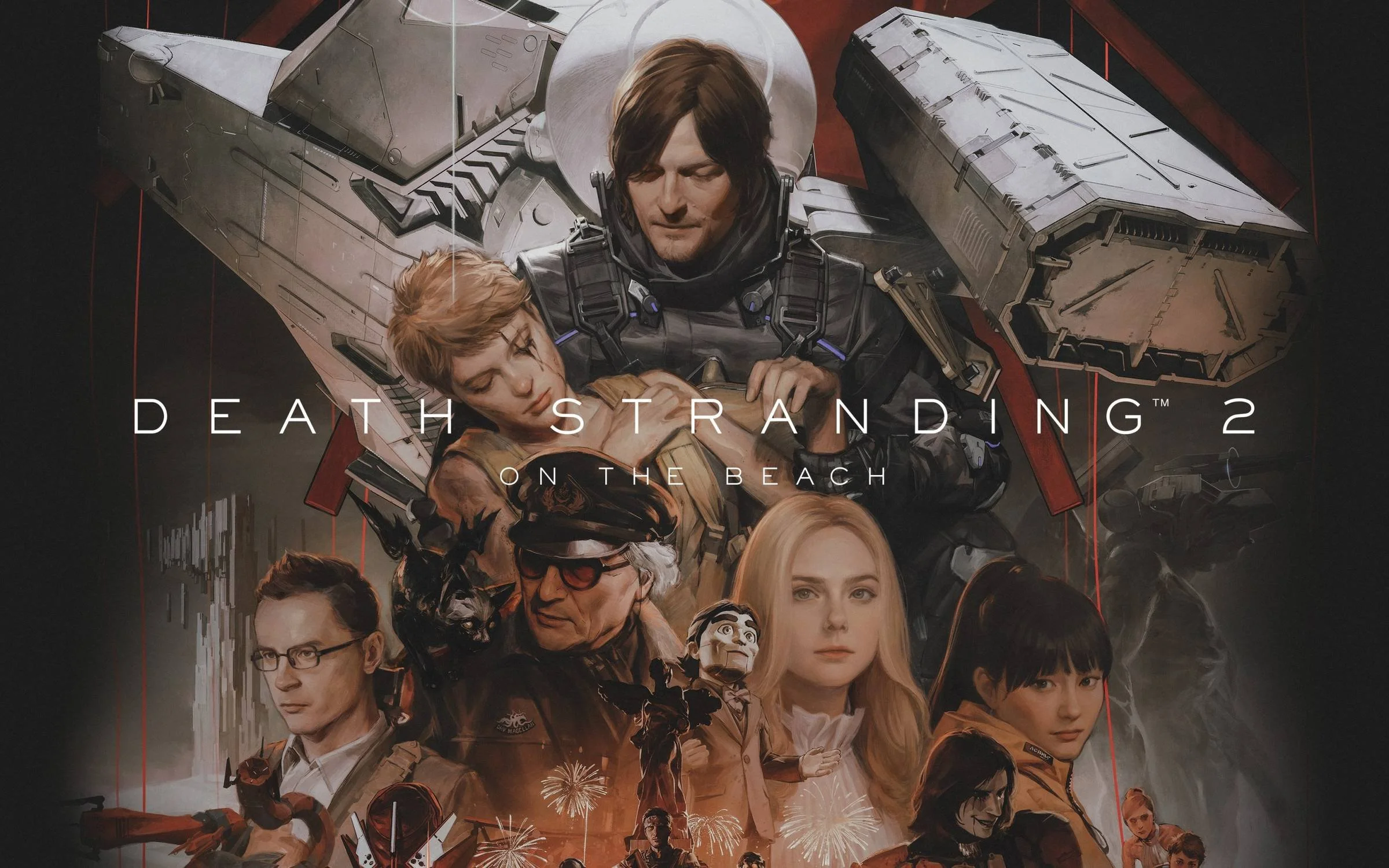
The difficulties that Kojima Productions faced to develop Death Stranding were typically those that came from working with, and co-developing, an engine that they weren’t very familiar with.
The weight of those difficulties was weighed down ever more by the pressures that came from the situation Kojima Productions was in during that period of time.
Having been ousted from Konami, and with the executive pull that Konami had in Japan they chose to make it as difficult as they could for Kojima to re-establish himself in a new studio.
They had spread word through many banks in Japan to not provide Kojima with loans, and they had also spread word through corporate realestate in Japan to not rent out office spaces for his studio.
So once Kojima began laying the first bricks for this new studio there was a strong sense that they needed to create something that would both set the pace, and show what he and his team could create as a independent studio.
They chose the tagline “Tomorrow is in your Hands” for marketing, and made it clear that this game was all about the very concept of ‘connection’.
Kojima wanted to make a statement while exploring the idea of ‘connection’ by giving players an isolated and ‘post apocalyptic’ America as a sandbox for the gameplay, with the only directive being ‘to reconnect America’.
The first Death Stranding was overall very well received, and did do its job at establishing a new Kojima Productions.
With such an obscure concept, and with how well concluded the first title was, it was quite the surprise when Death Stranding 2: On the Beach, was announced at the 2022 Game Awards.
This final TGA announcement was made even more surprising when the sequel was shown off with its new tagline of “Should we have Connected?”, and had a much more violent and dark tone than the first games cryptic initial announcement.
So whats the deal with this sequel?
Why did the tone of its philosophy seemingly change so much?
What was its mission?
What were its difficulties?
The First Steps
Kojima had a desire to go further with Death Stranding because he had so many more ideas left in the tank from the last game, as well as a desire to explore and set his next title in Australia.
He had thought that Australia would be very fitting for Death Strandings gameplay because its extreme and often deadly environment, along with its wide variety of wildlife.
Though he has jokingly said that Death Stranding 2 is set in Australia because of his admiration and creative relationship with George Miller(Director of the Mad Max Franchise).
Likewise, George Miller has reffered to Kojima as ‘Almost’ his ‘brother’, and even contributed his likeness to Kojima for the role of ‘Tarman’ in DS2.
Hideo was full of inspiration and aspiration to build this Post-Death Stranding version of Australia and to further the ideas he had begun to develop with the first title.
From a gameplay standpoint his focus was to further refine the overall style of gameplay that comes with the task of delivering parcels, while also creating more depth with the environmental systems as well as the combat systems.
His goal was to make Death Stranding both a declaration of his studios passion and ability, as well as a piece of art that would stick with the players.
His overall goal for reception was to create a game that players had fun playing, but that would have some level of friction to it so that they’d learn and create a deeper connection with the game as a whole.
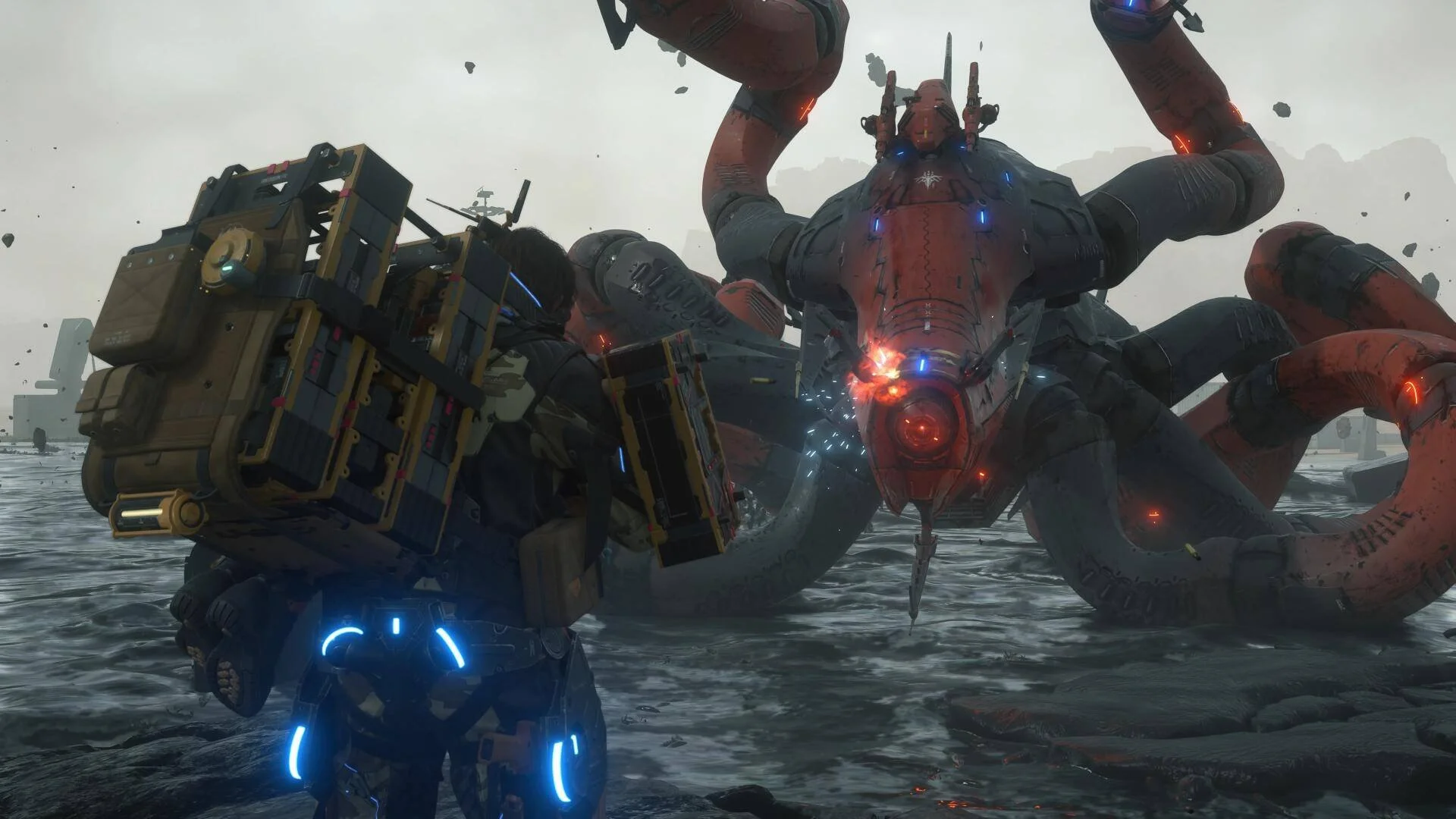
The Pandemic
Kojima chose Australia as the setting because of the aforementioned reasons, but one other reason was because of his own personal desire to visit Australia in person for an extended period of time.
Though this was made impossible due to the Covid-19 global pandemic.
Every aspect of DS2’s development was hit by the regulations and stresses that came from the pandemic era.
Now with the pandemic era came travel regulations that made both on-site reference procurement, as well as performance capture, very difficult in some cases; and just straight up impossible in others
”Remote work, during the pandemic and beyond, has been a sticking point for the game. “The hardest thing was the performance capture,” he says. Directing cast members such as Norman Reedus or Léa Seydoux remotely from Japan was the “worst experience”, his direction “almost impossible to relay” from the other side of a Zoom call. With restrictions in place during the early parts of development, the team tried to focus on scenes that didn’t utilise the main actors early on, but it wasn’t always possible.“And for the new cast especially, it was quite difficult,” he says, “Because I wanted to explain: this is the character, this is how I want you to act – but it was all remote!”
-Kojima with The Guardian >
Overall the pandemic and it’s mandated ‘remote’ work was a common problem to solve for during the development of DS2.
Alongside all the development struggles, Kojima had become sick while recovering from an eye surgery that he had sometime during development.
So from his perspective as the world began to change into this isolated place where the parcel deliverers kept things moving, it was like what he had written for Death Stranding was beginning to manifest itself into the real world.
This caused him to rethink his ideals surrounding the concept of ‘connection’, hence DS2’s tagline ‘Should we have Connected?’
The Great Connection
Sometime round early 2022 the pandemic restrictions began to ease up, and as the team slowly began to cycle back into the studio, Hideo began to notice something.
While the core members began to make it back to the studio in person, the rest of the team found this ‘remote work’ lifestyle to be a better fit for themselves at that time.
It showed Kojima that his idilic vision of ‘a world truly connected’ via some ‘chiral network’ of sorts is still missing the key factors that make us as humans feel true connection to begin with.
This is what sparked part of DS2’s tag line of ‘Should we have connected?”
It’s almost like a question for the main themes of DS1.
Where Death Stranding poses the power of ‘connection’ to the player while telling them how their actions put ‘tomorrow’ in their ‘hands’, Death Stranding 2 goes quite a bit deeper, almost to the point of scrutinizing this version the idea of ‘connection’ and in response asks ‘what is true connection?’.
Kojima had seen this ‘idilic’ future of connection forming right before his eyes during the pandemic, forcing him to question whether or not simply ‘interfacing’ with another human would send the biological signal to our brains to say ‘I have just connected with this person’; which would lead him to later realize how human connection isn’t just about the ability to interface with another human, its a deeper almost more primitive wiring within us that only fires off when we are in the direct presence of another person or even something that has been touched by another humans hands.
Its the kind of thing that makes us feel like we truly, truly, aren’t alone.
And it’s not to say this approach to the idea of ‘connection’ is without any precedent or regard.
This approach goes in line with quite a number of studies that have been done on human communication, that found that something round 85-90% of human communication is nonverbal (i.e. done through facial reactions, body language, and tone of voice rather than just the words a person is saying)
True connection isn’t just about having a back and forth of inputs and outputs with another person, its being able to see the particularities of how they walk, how they handle day to day objects in their own unique way with their own unique hands, its about noticing a person is sad and patting them on the back while telling them everything will be fine, its a multitude of little details that make us feel ‘connected’ to one another.
And quite frankly, I can very confidently say that you’ll never feel that sense of connection through a screen, or any other currently existing form of communication that isn’t in-person.
So why am I so focused on these aspects of ‘connection’?
Well it’s because art reflects life, and life reflects art, and while we as ‘creatives’ work to express ourselves through our individual mediums we must remember that true human connection is a huge part of how we learn to create art that’s meaningful and stands tall in the great test of time.
How we live our lives, outside of our art, and how we connect to others(as well as considering who we choose to connect with) will have a massive impact on the expression of your art.
It’s almost like that whole adage of ‘you are what you eat’ surpasses the strictly dietary, and jumps right on over to even our creative endeavors.
So with all of that being said.
Consider these things greatly, as they will greatly impact your level of fulfillment.
2: Creative Prompts From Us (ex. Write a short story, a poem, a song, or draw a quick illustration of these! Let your imagination run free.)
I. Connect with someone new over social media, exchange ideas, get to know each other.
II. Connect with someone new in person. Exchange ideas and get to know each other.
Then compare and contrast your experiences between the two examples of ‘connection’. Then, if possible and safe to do so, maybe see about in person connection with your new mate from social media.
3: Inspirational Quotes From Hideo Kojima
I. “But … you find other players all over the world. You’re indirectly connected … And once you turn that [game] off and go outside … you see structures in real life, like the bridge here in Sydney. Someone made that! They might have passed away years ago, but you’re connected to them. Even if you haven’t met the person. You are not alone in this world.”
II. “The reason why [new hires] want to work with us is they want to learn from mentors, or become better by working with other people,” he says. “But if you’re purely online … it’s almost like outsourcing. You want to talk and see what other people are doing, so you can expand yourself, you can grow.”
III. “Touch, presence, atmosphere—these are important for connection.”
Thanks for reading as always!