Battle Angel Alita - Yukito Kishiro Dreams Of Guns
Hi there!
I have been working through the manga yet another time and ended up watching the 1993 movie and felt something, different.
As per the usual for me, I began digging and I found some interesting facts and information about the original creator, Yukito Kishiro.
So what’s the story behind Battle Angel Alita, the manga?
1: Story Behind the Story ( 4 minute read )
The time was the late 1980’s and the manga landscape was filled with post-industrial anxiety due to the Cold War.
It was during this time that young mangaka and future creator of Alita Battle Angel, Yukito Kishiro, was asking himself the question “What remains human when the body is replaceable?”
So he began working on his third manga, Gunnm, literally translated to Gun Dreams.
But what came before?
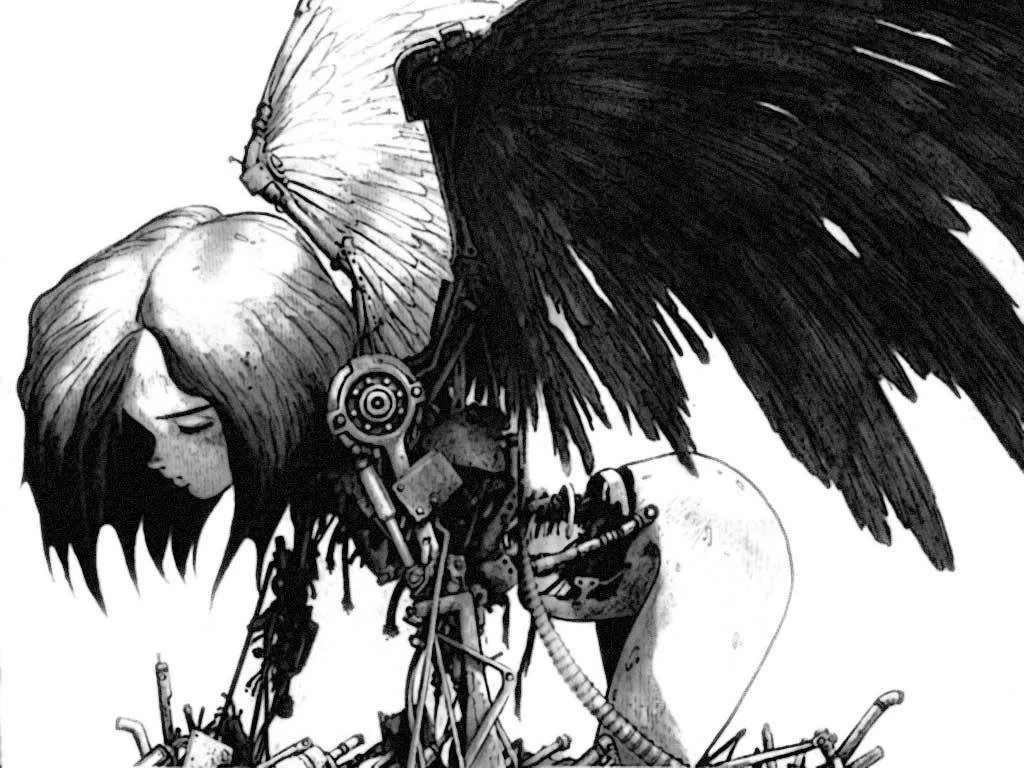
Analyzing what the man analyzed
From an early age, Kishiro grow up in a Japan that was leading the charge on modernity.
They were accelerating technologically far beyond other countries while maintaining cultural traditions.
This futurism can be seen in many works including but not limited to the likes of Blade Runner, Star Wars, Alien and beyond.
It was in this environment that Kishiro found himself taken by the cyberpunk aesthetics and tones of these worlds.
He was not only fascinated by sci-fi and cyberpunk, but also by other manga artists such as the legendary Osamu Tezuka (Astroboy) and Katsuhiro Otomo (Akira).
Tezuka’s moral storytelling and Otomo’s detailed environments and realism led to adding weight to Kishiro’s big story.
Martial arts culture was yet another area of analyzing that he had a deep fascination with. The technique, discipline and physical expression was pure art to him.
“I believe like the martial arts are called an art for a reason,” Kishiro said. “There’s an element of grace to it. So, with each [moment] of choreography in each scene, I always try to imagine that balance. And that’s going to be different for each character. For example, with a non-experienced fighter, you put two of those together and it’s going to be a very rough around the edges, a very grudgy fight. Whereas, if someone is very well-trained in the arts, you’re going to see more of that side being graceful.” - Kishiro in an interview with CBR.
Each area of study and interest leads to another.
He studied and analyzed mechanics, biology, philosophy, cybernetics and beyond.
All of which show up in his works.
Enrichment for the Artist
One fact is clear in any and all creators that I see: the more you are interested in the more interesting your work is.
This fact can be seen everywhere in Kishiro’s life.
Everytime he analyzed a subject or body of art, it enriched him as an artist.
This enrichment leads to newer and connected subjects of study.
Newer and connected bodies of art.
Earlier I mentioned that Gunnm (Battle Angel Alita in the west) would be his third manga.
This is because his first two had already ended.
He began with short works in the 1980’s in order to fulfill his High School goal of winning a mangaka award.
While he would be nominated for a “Best New Artist” award from Shogakuban’s ‘Shonen Sunday’ magazine in 1984, it was his early works that would develop his reputation for detailed art and darker themes and tones.
Works like Hito show Kishiro’s fascination with identity and a theme that would be central to Alita, the difference between human and artificial life.
Just like any master creator, it takes time and effort for all of the analyzing and enriching to blend and meld in the person.
This is how artists develop their own voice.
But there was one part missing for Kishiro, inspiration.
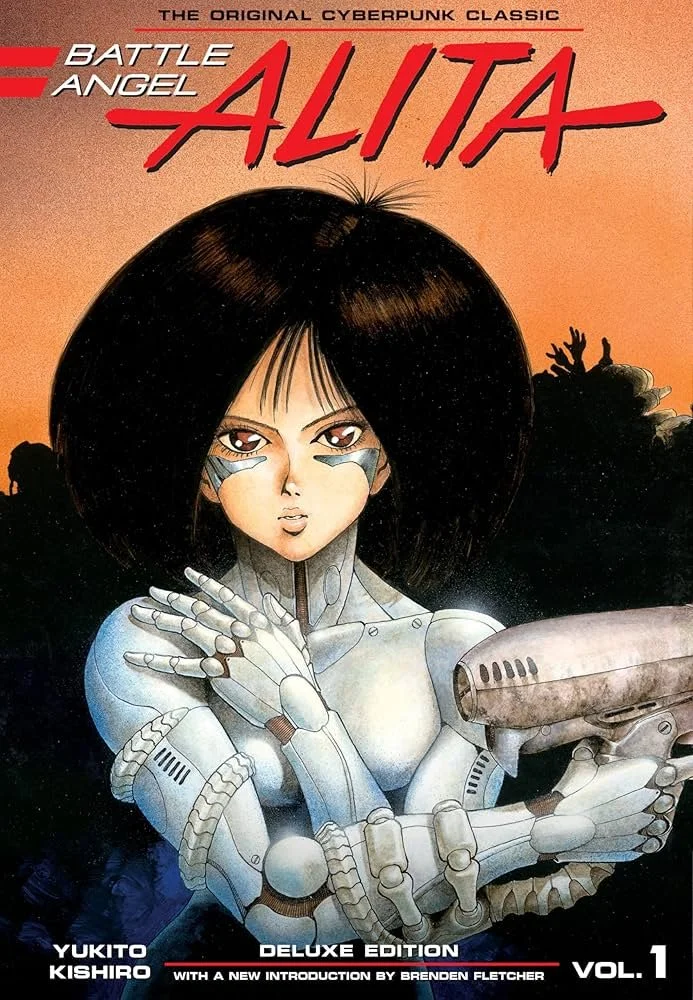
Inspiration all around and within
So here’s a hard pill to swallow: if you think that completing a goal is going to bring fulfillment, you’re wrong.
When Kishiro won the award, he didn’t feel fulfilled, he was disappointed.
“In the long run, I’d won an award at the age of 17,” Kishiro says. “In the long run, it was something of a disappointment. I’d reached the point where I was satisfied with my art, but my ideas on how to structure content were still vague. I didn’t really know how to shape a story, and there wasn’t anything in particular that I’d wanted to say. I was uncomfortable with the level of my work.”
Oftentimes we think that completing a goal will satisfy us, but really it gives us the journey to experience.
And inspiration is the fuel for the journey.
So the question becomes, how do you get inspired?
We already know that waiting around for it to happen won’t work.
The truth is, to get inspired, you need to continue on the journey.
I know, it feels lame to hear but there is a beauty to it, I promise.
Back to Kishiro, in 1988 he published a “horror story with somewhat of a profound theme.” according to the man himself.
The manga was called Kaiyosei, and would be described as “…the work of a madman!” per one of the judges in the selection process for the manga.
His editor was an understanding person and saw the wonderful story within the horror manga.
The manga received an honourable mention in the same contest that his first manga won years prior.
As it often goes, the creative must create, and so did Kishiro.
He had drawn inspiration from so many works, so many subjects, so many topics.
Yet in the journey of creating, he found inspiration in his own works.
Some of the feedback for Kaiyosei was for a cyborg police officer in the story. It was sketchily drawn, and yet had potential.
It was this suggestion that would serve as the basis for Alita Battle Angel.
At this point the inspiration was flowing and Kishiro was connecting the dots within.
His love of cybernetics, technology, martial arts, philosophy and beyond coalesced into a futuristic cyberpunk story filled with questions about identity, morality, and selfhood.
Wrapping it all up.
Battle Angel Alita would be serialized over 9 volumes and 5 years and is widely regarded as one of the most important mangas in the Sci Fi/Cyberpunk genre amongst the likes of Akira and Ghost in the Shell.
While the ending feels rather rushed even by Kishiro’s admission, he would later return to the world of Battle Angel Alita in the sequel series.
I am sure that I will be writing more about Battle Angel Alita at some point for Compendium, but for this one it was exciting to see the three core tenets of Creative’s Compendium play out in the story of Yukito Kishiro.
Analyze. Enrich. Inspire.

2: Creative Prompts From Us (ex. Write a short story, a poem, a song, or draw a quick illustration of these! Let your imagination run free.)
I. How many bodies of work do you have? Keep creating! Remember, the goals give us the journey.
II. Dig through your past works, there is bound to be something that will inspire you to create something new!
3: Inspirational Quotes From Yukito Kishiro
I. “Even if the body changes, something remains.”
II. “Violence in my work is not the point — it is the context.”
III. “The question is not what you are made of, but what you choose to become.”
Thank you for reading!