The Legend Of Zelda: Twilight Princess - To Measure Personal Progress
Greetings and Welcome back to the Compendium! Over the last couple weeks I’ve been dipping my toes into a game that is very near and dear to my heart. But more than that, I believe that story behind this particular title gives some perspective on how we perceive personal progress. So without further ado, What’s the story behind ‘The Legend of Zelda: Twilight Princess’?
1: Story Behind the Story ( 4 minute read )
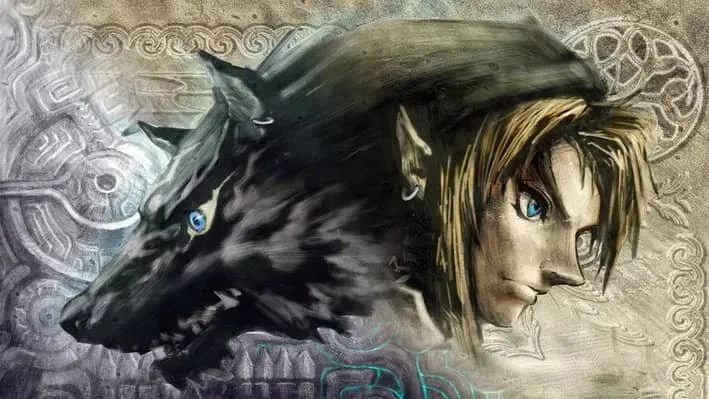
It’s around 2003, Wind Waker had just released, and it was received with quite a lot of ‘discussion’ surrounding its difficulty and art style.
From a consumer standpoint they felt as though Wind Waker was made much easier than Ocarina of Time, and that its art style was seemingly designed for a much younger audience.
From a critics standpoint it was praised for its design, its open-sea exploration, and its music score.
However from Nintendos standpoint it was a risky entry in a foundational franchise, that was, in some aspects, developed behind the backs of the executive heads of the company; and was released to sales that were little more than half the sales of the franchises previous entry.
To Nintendo, it was a failure, and a poorly decided direction to take the series.
Allegedly Eiji Aonuma wished to create a sequel to The Wind Waker with similar graphics, though Nintendo of America suggested otherwise, saying that the lower than expected sales for The Wind Waker weren’t due to anything except the graphics.
So when the question of ‘what comes next’ came up, Eiji Aonuma and Shigeru Miyamoto decided that they wanted to make ‘the best Zelda of all time’, and to do so they began with going back to a much more ‘mature’ tone and art direction.
They decided to go back to the fundamentals that birthed this franchise to begin with.
The Lord That Birthed a Legend
The idea for ‘The Legend of Zelda’ was born from a marriage of Shigeru Miyamoto’s childhood experiences of exploring nearby forests and caves, as well as his admiration for J.R.R Tolkien’s ‘The Lord of the Rings’ books.
He wanted to create an experience that evoked the same feelings he felt when he was a child exploring, and he wanted to draw from the world and creatures of ‘Lord of the Rings’ to meld them into something that, at that time, had never been seen before within gaming.
Then after roughly one year of development, The Legend of Zelda released on February 21st, 1986 for the Famicom Disk System in Japan.
It was then released once again one year later for the rest of the world, on the Nintendo Entertainment System.
So when Aonuma and Miyamoto began talks surrounding what would later become Twilight Princess, they went back to the same childhood memories and fantasy literature that inspired so much of what Zelda is at its core.
However rather than taking influence from only the novels as the first Zelda game did, the popularity of Peter Jackson’s recently released Lord of the Rings movies influenced the realistic aesthetic of Twilight Princess as well as motivating the development team to create a massive world to match the scale that fantasy audiences now expected.
Aonuma had planned to lean into the realistic and more mature tone, but he also wanted to ‘shake things up’ with some sort of ‘gimmick’ gameplay mechanic.
Something to spice up the usual Zelda formula, so he played around with the idea of giving Link some sort of ‘transformation’ ability.
The idea later led to the creation of Wolf Link, an idea that was met with a lot of pushback once it was brought to Miyamoto.
Aonuma has even said that “Miyamoto-san really gave me a piece of his mind after that!”, he continues, “I remember him telling me: ‘It’s a lot harder to make a four-legged animal than it is to make a two-legged human, you know!’”
However this push back would not discourage Aonuma too much, and he would continue forward with this direction.
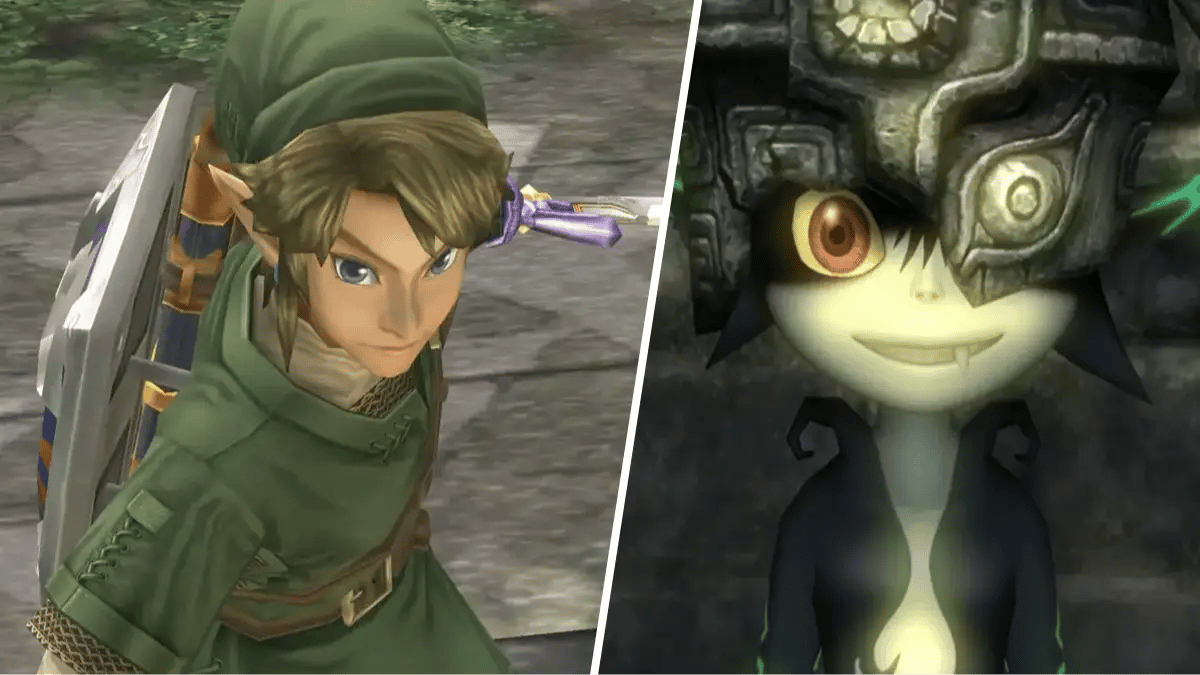
This led to a moment during development where Miyamoto was shown the first prototypes of Wolf Link in action, to which he simply pointed out that looking at the back of a four legged animal for the duration of the story is boring to look at; so he directed the team to put something atop the wolfs back.
From a functional sense this was to make the game more visually stimulating for the player while they are playing in this ‘Wolf’ form, but it ended up leading to the creation of the character Midna, and her existence began to emminate throughout the very plot of the game.
Over the course of the development the world and lore of this title had grown so much in size, that it was beginning to take shape as this grand ‘epic’ for the franchise; step by step, slowly marching towards the initial goal of being ‘the best Zelda game of all time’.
The problem that began to arise however, is that the project kept growing in scope, the team had to grow in scale to meet its demands.
This led to a somewhat over bloated team full of plenty of franchise veterans, as well as an abnormal amount of rookie developers who had zero experience working with Zelda; which was a first for the the franchise.
The rookie developers were being pushed to their limits and beyond which led to the kind of work that Miyamoto has described as ‘sloppy’.
This was a situation that Aonuma puts best when he says “when something has developed naturally to that size, it becomes somewhat difficult to apply the brakes”, so he consulted Shigeru for direction, and encouraged the team to begin filling this giant open world they had created with as many fun activities that they could before the initial release date.
But one day Miyamoto went over to Aonuma asking why development hadn’t moved on from the Gamecube over to the then upcoming ‘Wii’, to which Aonuma explained that he understood how disappointed fans would be if it hadn’t released on the ‘promised platform’.
This conversation would make its way up to then President of Nintendo, Satoru Iwata, who would explain that the only course of action at that point was to delay the release one year, and to release the game on both platforms.
And so they followed Iwata’s guidance, and Aonuma was relieved by this delay knowing that this extra time would allow him to make Twilight Princess the best Zelda game of all time.
The Greatest Legend Ever Told
Twilight Princess released as a launch title for the Wii in 2006, and was received very well both critically and commercially.
It garnered high praise for just about every aspect of its design.
From the dark and mature tone of its story, to its gritty and realistic art style.
The music, the combat, the puzzles.
It was all there, and it was awesome!
Personally I can’t really put into words how crazy this game was to look at when it came out.
From the title screen, to the first moments of gameplay, it simultaneously blew the minds of my three siblings as well as myself.
To us, and plenty of fans alike, it really did feel like we as kids were growing up and maturing, and Zelda was as well to meet us where we were.
It was clear that the DNA of Zelda was in there, and it was potent, and it was much more refined that it had ever been.
What Aonuma and Miyamoto had set out to create had, in far more ways than one, actually come to fruition.
Twilight Princess was basically an instant classic for the franchise, as well as gaming as a whole, and it all came from a realization that they had strayed too far in one direction off course from what Zelda was.
Now that’s not to just to crap all over Wind Waker, as that game is arguably one of the most important titles in the franchise for its emphasis on art direction over fidelity.
However after acknowledging Wind Wakers post mortem praise, and the appreciation it garnered over the years, it’s important to realize that at the time of its release it was not looked at the way it is now.
It was a commercial failure for Nintendo that required a solution to get the series back on track, and the solution was to go back to the basics.
To go back to the fundamentals that grew into Zelda in the first place.
But inevitably when you make that your approach, and marry that with the years of tenure and skill that come from working on something so diligently for such a long period of time, your going to approach those same fundamentals in a much more skilled and experienced manner.
During the development of the NES Zelda, the influence that came from those childhood memories of exploration, and fantasy literature, inspired the desire to make this large, non-linear world with an overworld and underworld; but the dev team had to make concessions, cut corners, or even scrap ideas due their abilities at that time.
During the development of Twilight Princess, the influence that came from those same sources, inspired the same desires; only this time, they were much more skilled and experienced to pull it off.
This kind of dynamic can be seen over the whole development of Twilight Princess.
Occurences of, a developmental desire born from an influence, mirror the development of the NES Zelda; except this isn’t their first rodeo.
I just think the the story behind Twilight Princess, when put against the story behind the NES Zelda, begins to paint a picture of a situation that is very common to us as humans.
Often times we find ourselves in these kinds of situations where we have developed our abilities to a point where we begin to loose what makes us, well, us.
And to compensate we focus on ‘pushing the bar’ for ourselves, or maybe we try ‘something way out of our wheelhouse’, with the hopes that either approach inspires some surge of creative juice into ourselves.
When, in a lot of cases all we have to do is go back to basics.
Go back to where it started for you, or maybe where it started for one of your projects, and try it again with all your gained skill and expertise.
See how far you’ve come.
Now go make something uniquely YOU!
2: Creative Prompts From Us (ex. Write a short story, a poem, a song, or draw a quick illustration of these! Let your imagination run free.)
I. Make a short referenceable list of ‘fundamentals’ within your field of art, and pick a couple to focus on each day for no less than 5 mins, more if you’d like.
II. Make a short referencable list of your own projects that you’ve completed that you might want to take a stab at again, take a good overview look at that list and see what pops out. See which project has the most amount of aspects of it that you’d like to do differently now. Attempt it again but with all that you’ve learned thus far.
3: Inspirational Quotes From Eiji Aonuma
I. “The decision as far as what creature to have him transform into, and considering that Link is going to start the game off, and gradually become the hero as he does in all the other games, we really thought that if a hero transforms into a beast, what beast is representative of the qualities of a hero? In my mind I had always seen wolves, and a lot of people on the team as well, creatures that have a very interesting mysticism about them”
II. “There's lots of different things that make Twilight Princess an important title, and I don't have a single conclusive answer for you. However, there was one thing rather personal to me that stands out. Until the original version was released, my wife had never shown any interest in playing any of the games I'd made. But all of a sudden, without any encouragement from me at all, she played through the whole of Twilight Princess together with our son, who was just three at the time.”
III. “Although in A Link To The Past we represented it in terms of light and dark which was a very stark contrast, the idea of there being two different worlds is one that has been around in the Zelda franchises for a long time. I think the original Zelda had talked about the overworld and underworld quite a bit in some of the supplemental materials. So in that sense, rather than it being an homage to A Link To The Past I think it’s really more appropriate to say that we’re continuing to focus on this reoccurring theme of the two different worlds or dimensions of Hyrule.”