feb 12th 1-2-3: Dormant, New, and Risky - Metroid Prime
Hi there, {{ subscriber.first_name }}!
It has been a great time the last two weeks. I have been playing more and more games from the past and in that finding all kinds of gold that I never experienced.
In doing this, I came back to one of my favorite games, Metroid Prime.
I grew interested, how did this game even come to be?
What’s the story behind Metroid Prime?
1: The Story Behind The Story ( 3 minute read )
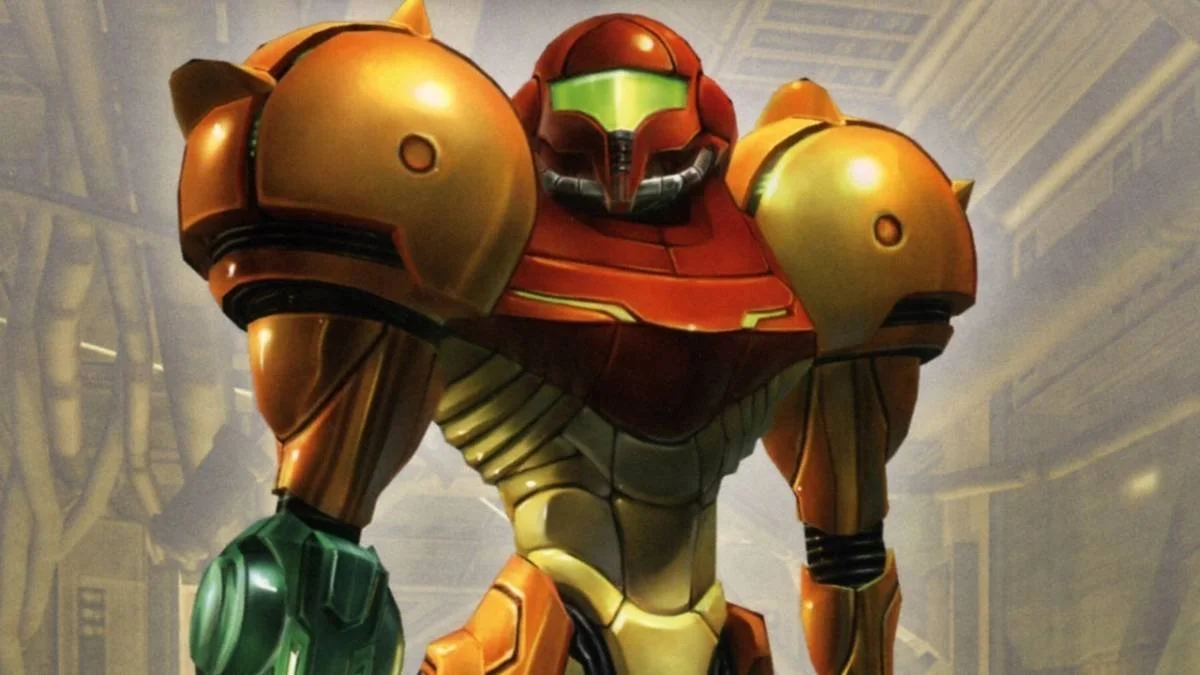
I’ll always remember, the rain.
It drops rhythmically and without ceasing.
The water droplets dash across my visor as I look around at the world I just landed on.
I feel it.
I’m not watching the world, it’s watching me.
This is Tallon IV, a planet that the bounty hunter, Samus Aran, and you, the player, retreat to after a mad dash out of a space pirate facility that was ready to explode in space.
I am getting ahead of myself though.
Before the release of Metroid Prime in 2002, Metroid was a 2D side scrolling adventure game.
Much like many of the games from the retro-gaming era, many developers were looking at their library of IPs and deciding which one could get the 3D makeover.
It had been a while since a Metroid game, 8 years in fact.
The series was officially dormant, and so Nintendo decided to take a bet.
What if they were able to bring back Metroid, but with a perspective change?
During this time, the First Person Shooter genre was becoming increasingly more popular and Nintendo figured Metroid was the perfect IP to make the leap to 3D.
How could they iterate on Metroid while maintaining what made it unique?
Nintendo decided the way to do this was two-fold:
They decided to entrust an outsider studio to handle development of this 3D Metroid.
They solidified its identity. Not a First Person Shooter, a First Person Adventure game.
So Nintendo producer Kensuke Tanabe was assigned to manage the partnership.
The developer that Tanabe decided to entrust the project to was none other than Retro Studios out of Austin, TX.
In the late 1990’s into early 2000’s, Retro built tech and prototypes, all while Nintendo continued to evaluate whether Retro was capable of carrying a flagship IP.
Both Nintendo and Retro had some bumpy roads early in development with disagreements or mismatches in approach.
Eventually in 2001, Tanabe was placed in charge of Retro, which formalized the co-development relationship that would define Prime.
Throughout the development from 2001 through to release in 2002, there would be intensive iteration and negotiations between Nintendo and Retro.
It was clear that the Western Studio instincts were colliding with Nintendo’s “Nintendo Game” expectations.
This led to long meetings, revised bosses and mechanics throughout the development process.
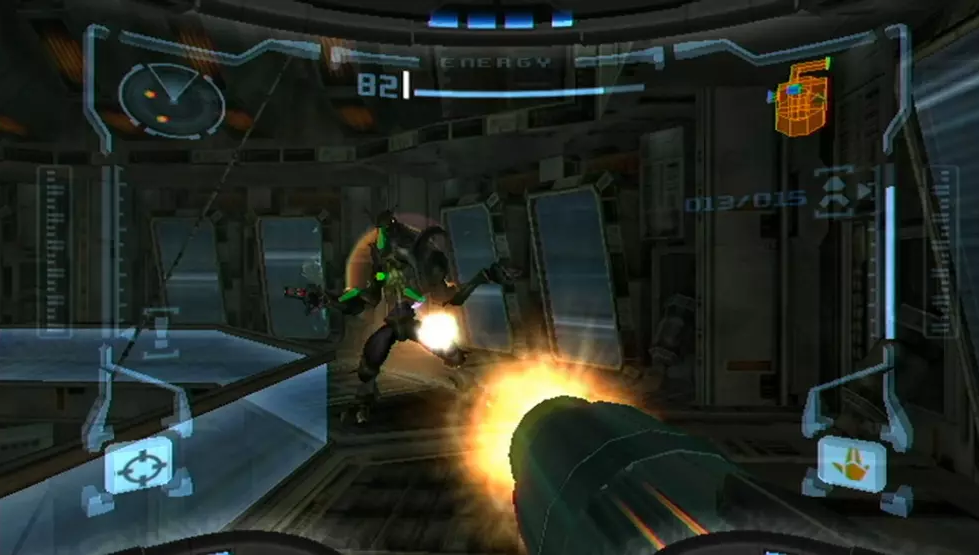
Finally, on November 18th of 2002, Metroid Prime released on GameCube in North America.
Now if you know anything about Metroid Prime, you already know how it was received.
If you don’t, let me tell you that the release was explosive and its reach far and wide.
The critical reception was extremely high and to this day is still cited as among the best GameCube era games.
Players were in consensus with critics: the atmosphere and immersion were second to none.
The environmental storytelling was unlike anything else anyone had seen.
This was indisputably Metroid in 3D.
See during development, exploration became the identity of Prime.
Where in 2D, “room-by-room” discovery was what drove the gameplay, in Prime seeing was the primary verb.
The world is was built to be scanned using the scan visor in game.
There were environmental details, items, enemies, and more that you could scan to gain in-world knowledge that translated to gameplay and progression.
The immersion was absolutely breathtaking.
Metroid Prime’s impact cannot be overstated.
The partnership between Retro Studios and Nintendo paved the way for future partnerships.
It also proved that friction doesn’t mean failure.
Even though there were disagreements or approaches that didn’t align fully, it paid off in what was shipped.
To this day, playing this game feels like landing on a planet that was getting along just fine without you landing on it.
Feeling isolated, at odds with nature, and driven by the need to explore echoed throughout every facet of the game.
All of this because Nintendo and Retro Studios decided to preserve the essence and change the viewpoint.
This brings us back to Tallon IV.
Maybe you shouldn’t be on this planet.
Maybe you should explore it all.
And just maybe, you do explore it all, and end up having the adventure of a lifetime.
As you think about what to do, the rain continues to fall.
The droplets continue to dash across your visor.
All while the world of Tallon IV watches you.
2: Creative Prompts From Us (ex. Write a short story, a poem, a song, or draw a quick illustration of these! Let your imagination run free.)
I. How can you “preserve the essence” of what you are making while changing the viewpoint?
II. Is there someone that you can collaborate with to create something new and exciting to you?
3: Quotes From the Team
I. “There were many moments where our ideas did not align, but that friction was necessary to create something true to Nintendo.” - Kensuke Tanabe (Producer, Nintendo)
II. “Metroid is about isolation. Even in first-person, that feeling had to remain untouched.” - Kensuke Tanabe (Producer, Nintendo)
III. “We wanted the world to feel alive even when nothing was happening.” - Mark Pacini (Director, Retro Studios)
Thank you so much for reading!