Death Stranding - The Next Logical Step
Greetings, and welcome back! After a long break from covering Hideo Kojima’s works, we’re finally back with the next title in his line of works. So without further ado, What’s the story behind Death Stranding?
1: Story Behind the Story ( 4 minute read )
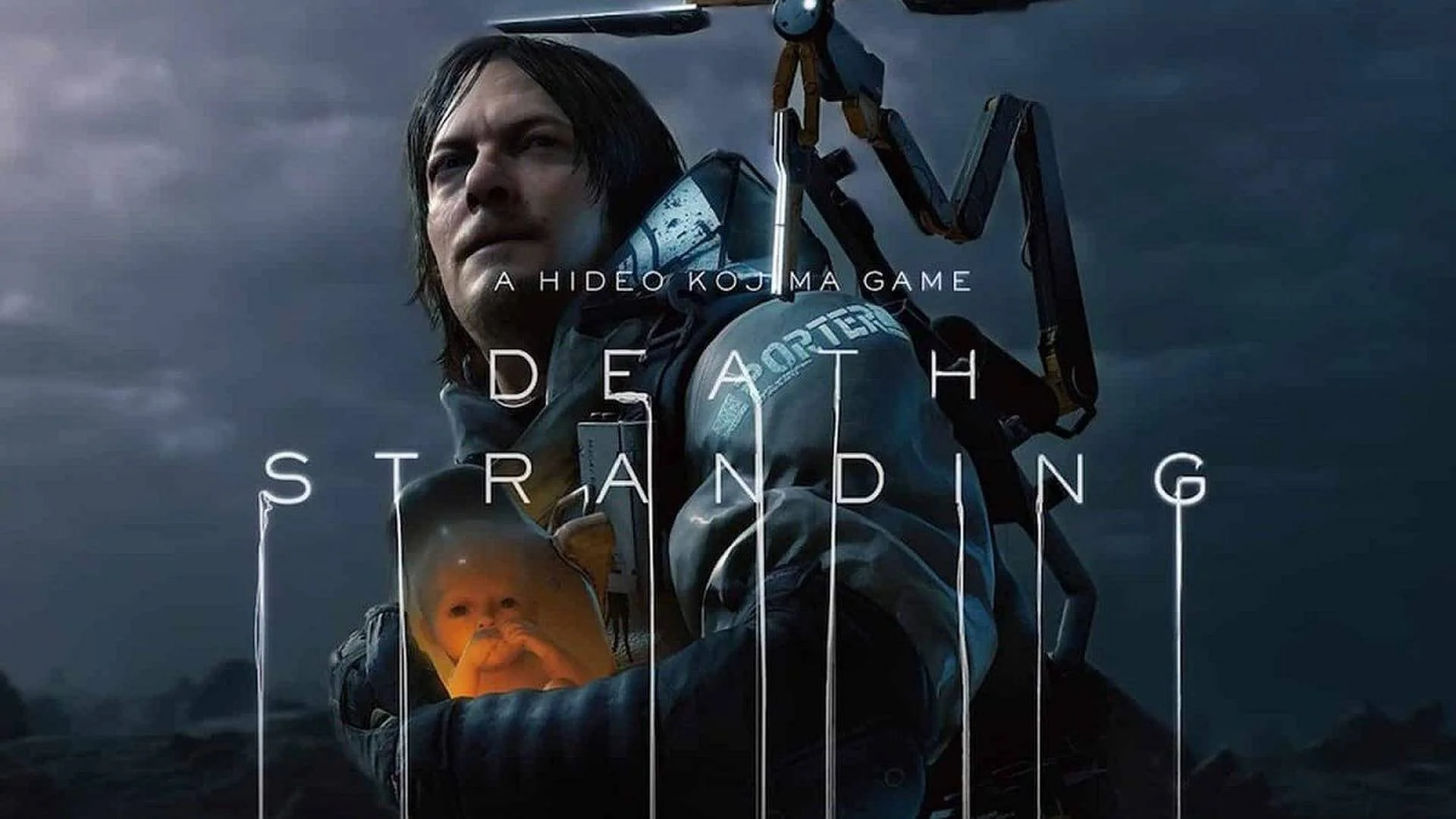
Soon after Kojima was so unceremoniously relieved of his duty and status at Konami he began putting together a new Kojima Productions, one that would finally give him the creative freedom he had sought after all this time.
With this first project he planned to make something so wildly ambitious, obtuse, and just down right different to what he had built his following with.
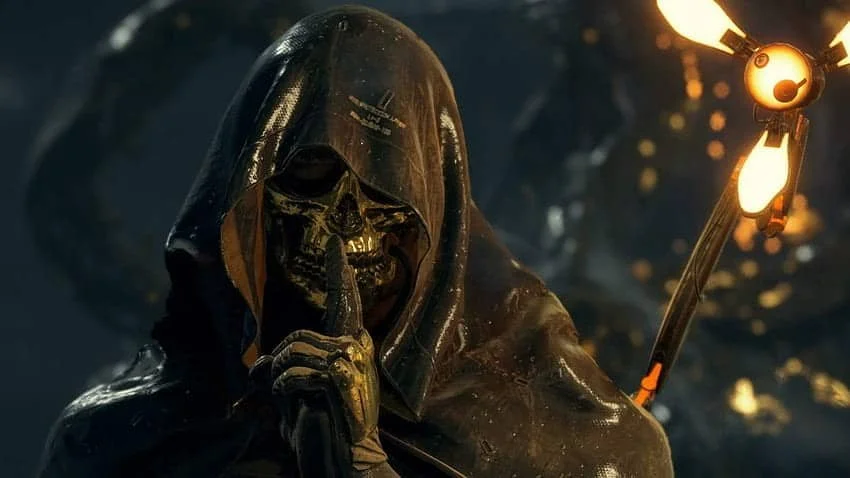
Being largely known for his “Tactical Espionage Action” it was quite a shock when the first reveal trailers for Death Stranding revealed a more ‘horror-centric’ style and theming.
These insanely cryptic, but strikingly evocative cinematics that he released over the course of the development of Death Stranding painted the picture of maybe some sort of ‘in-house’ expression of what had been conceptualized for the now cancelled Silent Hills.
What made this idea even more legitimized in the minds of the fans was the fact that this new project would share the same protagonist actor by way of Norman Reedus.
Then came the gameplay reveal.
Was it finally clear what Death Stranding would be?
No not really, in fact the gameplay reveal finally showed that this title was some sort of delivery simulator?
Or what Kojima called a new ‘strand’ type of game?
Fans were understandably a bit shook by this reveal, but many stayed confident in Kojima’s abilities.
A Rope, a Porter, and an Olive Branch
The gameplay of this game was largely inspired by a short story Kojima had read around that time called ‘Rope’ by Kōbō Abe.
The story surrounds the idea of connecting people, instead of fighting people.
The ‘rope’ signifies the ‘passing’ of a rope to another in order to pull them closer.
While the ‘stick’ is used to poke and prod another away from yourself.
These kinds of ideas melded with another book titled ‘The Postman’ by David Brin which in a lot of ways, i think, embodies the concepts that drive the overall gameplay of Death Stranding.
‘The Postman’ is a book about the significance of postal workers, and literally shares the same core idea of a mailman working to reconnect a ‘broken’ America.
“This is about an era of individualism. Everyone is fragmented, in America or Europe, but at the same time we’re connected by the internet. This magical technology should have made people happy, but we’re battling each other,” -Hideo Kojima with Daniel Dawkins, from The Guardian, November 19th 2019.
Kojima’s apparent yearning to express his ideas surrounding the idea of ‘connection’, I believe, bleed quite naturally into the development of Death Stranding.
The entire dev cycle was in one part the actual ‘boots on ground’ development of the title, and one part a collaborative effort with Guerilla Games to refine the Decima engine.
“Keep in mind we had no contract or anything at this stage, yet still they handed over what was basically the crystallization of their efforts over many years. They simply said, “Mr. Kojima please use this engine,” and we thought these people are incredible.” - Hideo Kojima with Playstation Blog, 2017.
A gift for free? No it was a formal offer to begin a partnership journey to create a rarely spoken about, but wildly revolutionary rendering engine.
The Decima engine, to put it in the simplest form is a revolutionary engine because of its way of rendering.
Without getting too deep into technical jargon, the Decima engine renders the simplest form of the game around the player, and only what is within the actual camera of the player gets fully rendered to completion.
This allows the developers to really push the boundaries of detailed renderings for character models, item models, terrain mappings, etc..
This in turn allows the developers to push the fidelity of a game far past what should be technically possible for the hardware they are developing on.
It’s completely changed the game when it comes to the processes in which developers use to ‘optimize’ these highly detailed worlds.
This engine has most notably been used in the following titles.
Death Stranding
Death Stranding 2
Horizon Zero Dawn
Horizon Forbidden West
Until Dawn
Killzone Shadowfall
While the seedlings of this engine goes back a bit in Guerilla Games catalogue, the really remarkable progress was made on the engine during this period of time where it was being passed back and forth between the two studios.
“It was different from the engine they originally gave us, so we decided we should give this new engine a name. That’s when we came up with the ‘Decima’ name (derived from Dejima – an artificial island in Japan where The Netherlands and Japan would trade during the Edo period). I really feel that with both of us working on this engine we are accomplishing the work at twice the speed and building something really fantastic.” - Hideo Kojima with Playstation Blog, 2017.
His connections with Guerilla and their joint effort on the Decima Engine allowed his team to create the aesthetic flavor of Death Stranding, with a fidelity that could actually provide the graphical support for these ultra detailed and deeply emotional performances.
The Next Logical Step
These ideas of ‘reconnecting humanity’, or pulling people closer rather than pushing them away, I believe, is the logical next step in Kojima’s philosophies as a creative.
He had spent the last 20-30 years painting the grim realities of the ‘shadow governments’ striving to control the world.
He wrote about potential World War 3’s and the unknown prior events that would prevent them.
He wrote about ‘allied’ nations on the outside, quietly working to destroy each other from the inside.
He wrote about defunct or otherwise dysfunctional father-son type relationships.
About the evils of humanity, and the lengths one man would go to ensure that ‘his interests’ were achieved, and all out of the deceptive inner workings of the greedy.
Hell he even wrote about a man who would sell the entire world out, just to achieve ‘his’ ideal vision for the world.
And so now, he wrote about connection, the need for relationship, and the true value of those who work to keep us all connected.
Death Stranding is about a borderline esoteric, cataclysmic event that ripped all this ‘inner connectivity’ we as humans have created via things like the internet.
Its about humans who had all those day to day forms of relating to one another stripped away overnight.
Your supposed to feel alone.
Your supposed to feel bored at times.
Your supposed to feel the solemn and somber tones floating around this desolate and unrecognizable America.
And your supposed to look for any human contact, even if its by way of some left behind ladders and ropes from another Porters delivery trek.
Death Stranding is supposed to make you look out your window in real life to simply see it anew.
It’s about humanity still, much like his old works.
But where Kojima’s older works were delving into the concepts of heroes from a political view, painting villains from one perspective as heroes from another.
Death Stranding is showing Humanity from an almost biological stand point.
Where MGS, for instance, shows how humans respond to a stick poking and prodding them away.
Death Stranding shows how humans are almost made to be handed a rope.
For if we aren’t handed a rope for long enough we will suddenly, one day, need to handed one.
The rope signifies relationship, it signifies understanding, it signifies that you care.
Now obviously considering the world we all live in, this might come off across as a bit too optimistic to some.
Hell it seems that way to me as well,
But I believe there’s some innate and unparalleled value to this concept of the rope.
It’s easy to be an asshole, it’s easy to break people down.
But it takes a lot of time and energy to build em up.
You never know what someone is going through, or how a small gesture on your end could seem like a reason to keep living for another.
“Everyone has [trauma], whether they say it or not. I’m not saying: go over your trauma, but I think people should look at it as their individualism as well. You don’t need to be embarrassed. I hope I can encourage people with trauma to be brave and just go on”. - Hideo Kojima with Daniel Dawkins, from The Guardian, November 19th 2019.
Or to put it in Death Stranding terms.
It’s easy to just not do the delivery.
But it takes a lot of time and effort to build some roads for your fellow porters to make all of theirs.
2: Creative Prompts From Us (ex. Write a short story, a poem, a song, or draw a quick illustration of these! Let your imagination run free.)
I. Think about what kind of project you’d like to collaborate with someone on. Seek a fellow artist out and propose a collaborative project. You never know what you may create.
II. Try to connect with some new people, you might just find that they inspire you in some new and exciting ways.
3: Inspirational Quotes From Hideo Kojima
I. “On the internet, like in games, we’re all competing for a headshot,” Kojima says. “Of course it’s fun, but we’re animals and can’t live alone. I want people to experience the meaning of connection through Death Stranding’s world and its systems.”
-Hideo Kojima
II. “Someone leaves a ladder and saves your life — that small kindness matters.”
-Hideo Kojima
III. “This is about an era of individualism. Everyone is fragmented, in America or Europe, but at the same time we’re connected by the internet. This magical technology should have made people happy, but we’re battling each other,”
-Hideo Kojima
Thanks for reading!